Description
HDPE Pipe Friction Welder: Complete Industrial Guide
Looking for a reliable HDPE pipe friction welder? This guide explains how it works, its benefits, types, and how to choose the right model for your needs.
What is an HDPE Pipe Friction Welder?
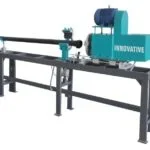
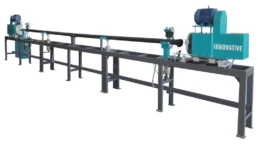
An HDPE pipe friction welder joins HDPE pipes using friction heat. First, the machine spins one pipe against another. This action melts the pipe ends. Then, it presses the molten ends together. As a result, it creates a strong and leak-proof joint. Also, the welding process is fast. Moreover, it gives accurate results without using extra materials.
How HDPE Pipe Friction Welding Works
-
Align the Pipes
First, align the pipes. Then, place them in the machine clamps to ensure perfect alignment.
-
Generate Heat
Next, spin one pipe against the other. Friction creates heat at the pipe ends.
-
Melt the Ends
Then, heat softens the pipe surfaces evenly.
-
Fuse the Pipes
After that, stop rotation and press the molten ends together.
-
Cool and Solidify
Next, keep pressure until the joint hardens completely.
-
Check the Joint
Finally, inspect the joint visually. You can also perform a pressure test.
Why Industries Use HDPE Pipe Friction Welders
Industries prefer this machine because it:
-
Creates leak-proof joints every time
-
Reduces errors compared to manual welding
-
Saves time and lowers labor costs
-
Integrates easily with automated production lines
-
Completes projects faster, both industrial and municipal
Types of HDPE Pipe Friction Welders
| Type |
Use Case |
Key Advantage |
| Semi-Automatic |
Medium-volume work |
Easy to operate and cost-effective |
| Fully Automatic |
High-volume lines |
Fast, consistent results with minimal operator input |
| One Side Welding |
Specialized connections |
Produces stable welds and reduces misalignment |
| Rotary / Spin Welding |
Large diameter pipes |
Ensures uniform heating |
| Butt Fusion Welders |
Standard industrial pipes |
Strong, pressure-resistant joints |
Key Features and Benefits
-
Precision Clamps – Hold pipes firmly, which ensures accurate joints.
-
Controlled Speed & Pressure – Keep heat uniform to prevent defects.
-
Automatic Cycle Control – Reduce human errors and boost productivity.
-
Digital Monitoring – Track temperature and pressure to guarantee joint strength.
-
Adjustable for Pipe Sizes – Handle multiple diameters for flexible operations.
How to Choose the Right HDPE Pipe Friction Welder
-
First, match the capacity to your largest pipe.
-
Next, select the automation level based on production volume.
-
Then, check pipe material compatibility (PE80 / PE100).
-
Also, consider your budget and ROI.
-
Finally, verify integration with conveyors or automated lines.
Advantages Over Manual Welding
-
Manual welding produces inconsistent results and slows production.
-
Adhesive or solvent welding creates weak joints and requires long curing.
-
In contrast, friction welding delivers fast, strong, and repeatable results.
Problems Solved by HDPE Pipe Friction Welders
-
Misaligned joints → Clamps hold pipes accurately.
-
Uneven heating → Machine maintains correct speed and pressure.
-
Weak joints → Uniform fusion ensures strength.
-
Labor-intensive work → Automated cycles improve productivity.
Conclusion
An HDPE pipe friction welder joins pipes quickly, safely, and reliably. Operators reduce labor and eliminate errors. Teams achieve strong, leak-proof joints. Also, these machines support automation and smart factory systems. Manufacturers can choose models based on capacity, material, and workflow needs. Overall, friction welding improves efficiency, reliability, and ROI.
FAQ
Q1: What is an HDPE pipe friction welder?
A: An HDPE pipe friction welder joins HDPE pipes using friction heat, melting the pipe ends and pressing them together to create strong, leak-proof joints quickly and efficiently.
Q2: How does HDPE friction welding work?
A: The machine aligns the pipes, spins one pipe against the other to generate heat, melts the ends, fuses the pipes under pressure, and cools them to form a solid joint.
Q3: What are the main types of HDPE pipe friction welders?
A: Common types include semi-automatic, fully automatic, one side welding, rotary/spin welding, and butt fusion welders, each suited for different pipe sizes and production volumes.
Q4: Why should industries choose friction welding over manual or adhesive welding?
A: Friction welding produces strong, repeatable, leak-proof joints faster than manual welding. It reduces labor costs, prevents misalignment, and integrates easily with automated production lines.
Q5: How do I choose the right HDPE pipe friction welder?
A: Consider pipe diameter, material compatibility (PE80/PE100), production volume, automation level, budget, and integration with existing production lines.
Q6: Can friction welders handle large diameter pipes?
A: Yes. Rotary/spin welders and fully automatic models are designed to weld large diameter pipes while maintaining uniform heat and consistent joints.
Q7: How do I ensure a strong, leak-proof joint?
A: Use precision clamps, maintain correct speed and pressure, and follow the automatic cycle control. Always inspect the joint visually or perform a pressure test.