Description
Big Paper Roll Film Packing Machine – Manufacturer & Exporter
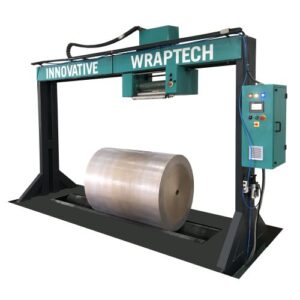
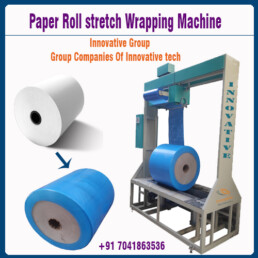
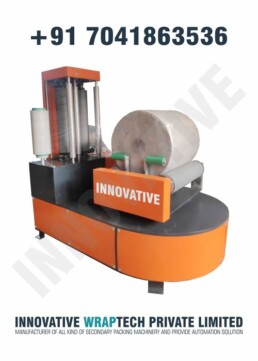
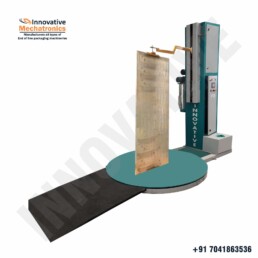
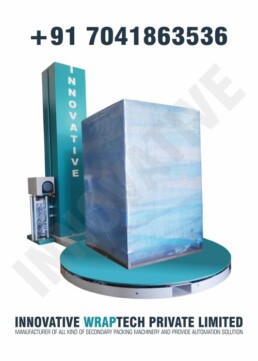
The Big Paper Roll Packing Machine is a modern solution for wrapping large paper rolls. It protects the rolls and saves both time and labor costs. Many industries use it to prevent damage and increase efficiency. It also reduces material waste. Moreover, the pre-stretch film system ensures the packaging material is used optimally.
How It Works
1. Load the Roll
Place the paper roll on the machine’s platform. Make sure it is stable before starting the process.
2. Place the Film
The machine automatically pulls the stretch film into position.
3. Wrap the Roll
Sensors guide the film evenly around the roll. The machine controls rotation and tension for consistent wrapping.
4. Seal and Cut
After wrapping, the film is automatically cut and sealed.
5. Finished Roll
The roll is now ready for storage or shipment. It stays safe from dust, moisture, and damage.
Why It Is Important
This machine reduces labor and saves time. Additionally, it wraps rolls consistently and prevents human error. By reducing film waste, it lowers costs and increases productivity. Overall, it improves both efficiency and safety in industrial operations.
Types of Machines
-
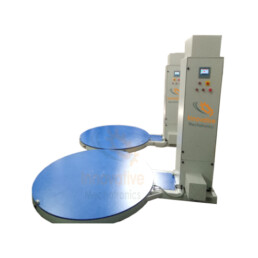
Semi-Automatic – Operators load the rolls and start the wrapping. Ideal for medium production.
-
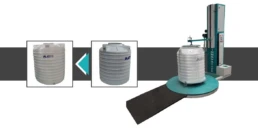
Fully Automatic – Loads, wraps, and unloads rolls automatically. Perfect for high-volume production.
-
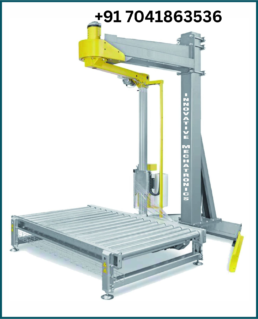
Horizontal – Wraps rolls lying down. Long or heavy rolls are easier to handle.
-
Vertical – Wraps rolls standing upright. Faster for standard-sized rolls.
Tip: Choose a type depending on roll size, weight, and production volume.
Key Features
-
Adjustable speed for different roll sizes.
-
Pre-stretch film system to save material.
-
Automatic cutting and sealing.
-
Load sensors for safety.
-
Easy-to-use control panel.
-
Faster packing with less labor.
-
Reduced film waste.
-
Consistent wrapping quality.
-
Safer for operators.
Standard Specifications
-
Roll diameter: 400–2000 mm
-
Roll width: 500–1500 mm
-
Film thickness: 15–30 microns
-
Wrapping speed: 10–30 rolls/hour
-
Power: 3-phase 380V, 50Hz
-
Weight: 500–1200 kg
Industries & Applications
-
Paper & Tissue Mills – Protect jumbo paper rolls.
-
Printing & Packaging – Pack printed rolls safely.
-
Textile Industry – Wrap fabric rolls efficiently.
-
Plastic & Film Industry – Protect plastic rolls during shipment.
How to Choose the Right Machine
Consider these factors:
-
Capacity – How many rolls you need to pack each hour.
-
Material – Size, weight, and type of rolls.
-
Automation – Semi or fully automatic.
-
Budget – Balance cost and operational savings.
Manual vs Machine
Manual wrapping is slower and requires more labor. As a result, it also consumes more film. In contrast, automatic machines wrap rolls faster and more securely, which significantly reduces damage. Consequently, these machines save both time and money, making them a more efficient and cost-effective solution.
Safety & Compliance
-
Emergency stop buttons and sensors protect operators.
-
Complies with ISO and CE safety standards.
-
Operators should wear gloves, shoes, and eyewear.
-
Regular safety checks maintain compliance.
Conclusion
The Big Paper Roll Packing Machine saves time, reduces costs, and protects products. Furthermore, it improves efficiency in industrial operations. Choosing the right model ensures optimal results for your business.
FAQ
Q1: What is a Big Paper Roll Packing Machine?
A: It wraps large paper rolls with stretch film, protects them, and reduces labor requirements.
Q2: How does it work?
A: The roll is placed on the machine, the film wraps automatically, and the machine cuts and seals it.
Q3: Why is it important?
A: It saves time, reduces labor, prevents damage, and ensures consistent packaging.
Q4: What types are available?
A: Semi-automatic, fully automatic, horizontal, and vertical machines.
Q5: What are the key technical features?
A: Adjustable speed, pre-stretch film system, automatic cutting and sealing, load sensors, and easy control panel.
Q6: Which industries use it?
A: Paper, tissue, printing, textile, and plastic film industries.
Q7: How to choose the right model?
A: Consider capacity, roll size/weight, automation level, and budget.
Q8: How does it compare to manual packing?
A: Machines are faster, more consistent, and reduce film usage, saving time and costs.
Q9: What safety standards apply?
A: ISO and CE compliant. Operators should wear protective gear, and emergency stops ensure safety.